



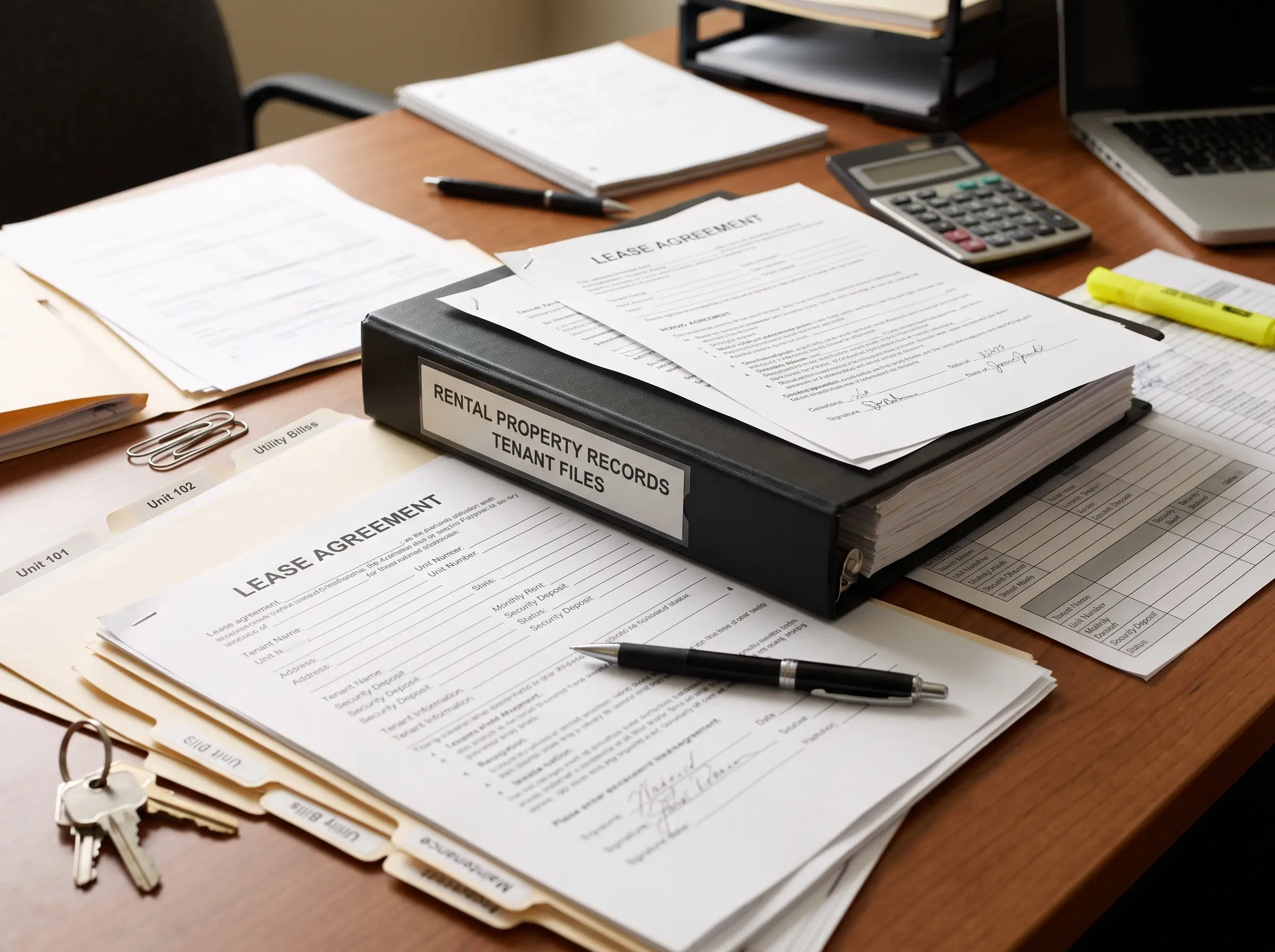
Texas is often called a landlord-friendly state, but reputation helps only if you have proof to back up your side of the story. Beyond working hard to stay legally compliant, nothing protects you like proper documentation.
When a tenant disputes a security deposit, a repair complaint, or an eviction, the landlord with organized files will likely come out ahead. Memory won't help, especially in legal cases where the court needs solid evidence. Here are the records worth keeping, and why each one matters.
Key Highlights:
- Documentation is your best protection. In a dispute over a deposit, a repair, or an eviction, organized records carry far more weight than memory.
- Keep the complete lease file. Hold the fully signed lease, every addendum and renewal, and required disclosures such as the federal lead-based paint disclosure for homes built before 1978.
- Photograph the property at move-in and move-out. Dated inspection reports, photos, and videos make it easy to show tenant-caused damage and speed up your deposit calculations.
- Put communication in writing. Emails, texts, letters, and notes from phone calls prove when you were notified of an issue and how quickly you responded. Keep proof of delivery for any notice you send.
- Treat your rental like a business. Maintain a clear payment ledger, repair records, tax documents, insurance policies, and ownership paperwork, all stored securely and organized for easy access.
1. The Signed Lease Agreement
The lease is your legal foundation, so keep the fully executed original, along with every addendum, amendment, and renewal you’ve issued. Texas law requires certain provisions to be in writing, such as a tenant's obligation to give advance notice before moving out, and these must be underlined or in bold print to be enforceable.
If your lease lacks the required signature, you will have trouble enforcing the terms. Also keep signed copies of any required disclosures, including the federal lead-based paint disclosure for homes built before 1978. Check the local, state, and federal laws landlords must follow.
2. Rental Applications and Screening Documents
Documentation begins the moment a tenant applies for the rental property. Hold on to their completed application, proof of income, ID verification, and screening results. If you ever face a fair housing complaint, these records can show that you applied consistent criteria to every applicant.
Keep a copy of your tenant selection criteria too. Texas law requires landlords to make those criteria available to applicants, and it affects what happens to application fees and deposits if you reject someone. Store them securely, since these files often contain sensitive applicant information.
3. Move-In and Move-Out Condition Documentation
Security deposit disputes are common, and the best way to avoid them is to keep inspection reports, along with photo and video proof of the property’s condition during move-ins and move-outs. You can compare them side by side to confirm which damages the tenant caused.
It also speeds up the deduction calculation process, which is crucial because the Texas Property Code requires landlords to return the deposit, or provide a written, itemized list of deductions, within 30 days after the tenant surrenders the property.
4. Security Deposit and Payment Records
Your ledger should clearly track every security deposit received, along with rent payments, including how much is charged, when it is paid, and any assessed late fees. If you accept cash, provide a receipt and keep a copy for yourself.
A clean payment history is critical to eviction cases for nonpayment of rent. Judges will want to see exactly what is owed and when. The history will also reveal patterns that signal bad tenant behavior, allowing you to take necessary steps to prevent late rent payments.
5. Written Communications
Keep records of emails, text messages, and letters between you and your tenants. If you talk over the phone, take notes and go through the topics covered again and confirm them with your renter. This provides proof for repair requests, inspection notices, rent reminders, and more.
If a tenant later claims you ignored a health or safety issue, a dated record of when you were notified and how quickly you responded can be decisive. Note the delivery method and date, and keep proof of the communication, such as a mailing receipt or a photo of a posted notice.
6. Maintenance and Repair Records
As a landlord, you have responsibilities for maintenance and repairs to keep the rental property safe and habitable. Document every repair request and completed repair, including the date reported, the work performed, who did it, and the cost.
Records can include contractor invoices, work orders, and before-and-after photos. Records of routine maintenance, such as HVAC servicing, smoke detector checks, and pest control, show that you take habitability seriously.
7. Financial and Tax Records
The IRS will treat your rental property as a business. Keep records of rental income, mortgage interest, property taxes, insurance premiums, repairs, depreciation schedules, and property management fees. Save closing documents from your purchase, since they establish your cost basis for depreciation and for calculating gains if you sell.
8. Insurance and Ownership Documents
Retain all your insurance policies, renewal notices, and claim files, along with your deed, title policy, and HOA documents. If a tenant requests it, you must disclose who owns and manages the rental property. Keeping it organized saves time and helps you stay legally compliant.
FAQs
1. How long does a Texas landlord have to return a security deposit?
- The Texas Property Code requires landlords to return the deposit, or provide a written itemized list of deductions, within 30 days after the tenant surrenders the property.
2. Why should I keep my tenant selection criteria?
- Texas law requires landlords to make these criteria available to applicants. Keeping a copy also shows that you applied the same standards to every applicant, which helps if you ever face a fair housing complaint.
3. What should I do if a tenant pays rent in cash?
- Give the tenant a receipt and keep a copy for your own records. A clean payment history is critical in nonpayment-of-rent eviction cases, since judges will want to see exactly what was owed and when.
Staying Compliant with Professional Guidance
Being a rental property owner can be tedious, even with good record-keeping. Between tenant screening and evictions, you have to retain and track many documents. Without the right tools and practices, you can miss key steps that could land you in legal trouble.
Area Texas Realty & Management uses tenant and owner portals to automatically record payment histories and tenancies, which can immediately reduce your administrative workload. We're also familiar with landlord-tenant laws, so we know which records matter.
Work with us, and we can help your rental property reach its maximum potential!
More Resources:
Effective Ways to Cut Rental Business Costs in Houston, TX
What Houston Landlords Can Expect from Day-to-Day Rental Operations